The same glow, a fraction of the cost
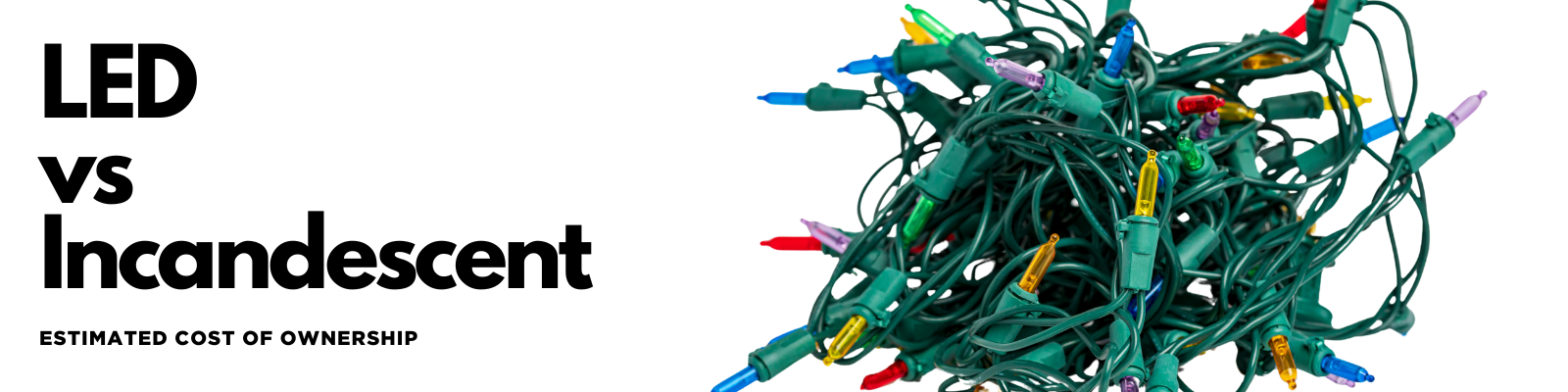
Decorative light strings follow the same rule as every other bulb: LED wins. Swap your old incandescent Christmas lights for LED and you get the same warm glow while using a small fraction of the electricity, with a few bonuses that matter this time of year.
Why LED holiday lights are better
- Safer. LEDs run cool to the touch. No hot bulbs near a dry tree, no burnt fingers.
- Sturdier. LED strings use epoxy lenses instead of thin glass, so they shrug off drops, tangles, and being stuffed in a box for eleven months.
- Longer lasting. A good LED string can still be lighting your tree decades from now.
- Easier to hang. Because they draw so little power, you can connect many more LED strings end-to-end without tripping a breaker.
What it actually costs
The U.S. Department of Energy ran the numbers on lighting a 6-foot tree 12 hours a day for 40 days:

Two things about those figures. First, LED isn't a little cheaper, it's dramatically cheaper, especially on the big C-9 bulbs. Second, those numbers use older, lower electricity rates. The U.S. average is now around $0.17 per kilowatt-hour and climbing, which only widens the gap. The more power costs, the more LED saves.
Bottom line
LED holiday lights cost pennies to run, stay cool, survive the attic, and last for years. It is one of the easiest upgrades you can make, and you only have to make it once.
Decorating a home, a business, or something bigger, and not sure what you need? A GoodBulb Lumen Master can help you plan it. And every GoodBulb purchase helps send light to families spending the season with no electricity at all.