A lighting retrofit sounds simple enough.
Take out the old lights. Put in LEDs. Save money.
Sometimes it really is that easy.
Other times, you discover three different ballast types above the ceiling, fixtures that haven't been opened in fifteen years, six different lamp sizes, and one mysterious bulb nobody remembers ordering.
That's why a good LED lighting retrofit starts before anyone climbs a ladder.
Whether you're upgrading an office, warehouse, retail space, school, apartment building, or another commercial lighting application, the goal is the same:
Use less energy while getting better light from the fixtures you already have—or figuring out which ones should be replaced altogether.
Here's how to plan an LED lighting retrofit without making it more complicated than it needs to be.
What Is an LED Lighting Retrofit?
An LED lighting retrofit upgrades an existing lighting system to LED technology without necessarily replacing every fixture.
Depending on your current setup, a retrofit might involve:
- Replacing existing lamps with compatible LED bulbs
- Replacing fluorescent tubes with LED tubes
- Bypassing or replacing an existing ballast
- Installing an LED retrofit kit inside an existing fixture
- Replacing an outdated fixture with a new LED luminaire
- Adding occupancy sensors, dimmers, timers, or other lighting controls
The right approach depends on what is already installed, how the space is used, your budget, and what you're trying to improve.
Why Retrofit Commercial Lighting to LED?
Energy savings usually get all the attention.
They're important, but they're only part of the story.
A well-planned LED retrofit can also mean:
- Lower lighting energy use
- Fewer bulb replacements
- Reduced maintenance
- Better visibility
- More consistent light
- Better control over color temperature
- Improved dimming and controls
- Less downtime replacing failed lamps
For a business with hundreds—or thousands—of lamps, even small improvements per fixture can add up.
The trick is choosing the right LED replacements.
Step 1: Audit Your Existing Lighting
Before buying anything, figure out what you already have.
Walk through the building and record:
- Fixture type
- Lamp or bulb shape
- Base type
- Existing wattage
- Number of lamps per fixture
- Number of fixtures
- Ballast type, if applicable
- Operating hours
- Current color temperature
- Areas where lighting is too bright or too dim
Take pictures.
Lots of them.
Photograph the bulb, the markings printed on it, the fixture, and the surrounding space.
Those photos can often tell a lighting specialist more than a spreadsheet full of guesses.
If you already have a lighting schedule, even better.
Step 2: Decide What You Want to Improve
Don't retrofit simply because someone said LEDs are better.
Know what better means for your building.
Your priorities might be:
Lower Energy Costs
If fixtures operate for long hours every day, reducing wattage can have a meaningful impact on energy consumption.
Less Maintenance
If your team is constantly replacing fluorescent tubes, HID lamps, or hard-to-reach bulbs, longer-life lighting may reduce maintenance work.
Better Visibility
Warehouses, manufacturing facilities, offices, retail spaces, and parking areas all have different lighting needs.
You may need more usable light—not simply more brightness.
Better Light Quality
Color temperature, color rendering, glare, beam spread, and fixture placement all affect how a space looks and functions.
More Control
A retrofit can also be an opportunity to add occupancy sensors, daylight controls, timers, or dimming.
Set your priorities before choosing products.


Step 3: Know Your LED Retrofit Options
Not every retrofit requires the same solution.
Option 1: Replace the Lamp
Sometimes the simplest option is replacing an existing bulb or tube with an LED equivalent designed to work with the current fixture.
This can reduce installation time and upfront cost.
But compatibility matters.
For fluorescent fixtures in particular, you'll need to understand how the replacement LED interacts with the existing ballast.
GoodBulb offers LED tubes designed to replace fluorescent lighting, including options for common commercial applications.
Option 2: Use an LED Retrofit Kit
A retrofit kit allows you to keep part of the existing fixture while replacing older lighting components with LED technology.
This can be a useful middle ground when the fixture housing is still in good condition but the internal lighting system is outdated.
Option 3: Replace the Entire Fixture
Sometimes keeping an old fixture doesn't make sense.
If it's damaged, inefficient, difficult to maintain, or poorly suited to the space, replacing the entire luminaire may provide a better long-term result.
Don't assume the least expensive option today will always be the least expensive option over the life of the system.
Step 4: Understand Fluorescent-to-LED Tube Retrofits
Replacing fluorescent tubes is one of the most common commercial LED retrofit projects.
It's also one of the easiest places to make a compatibility mistake.
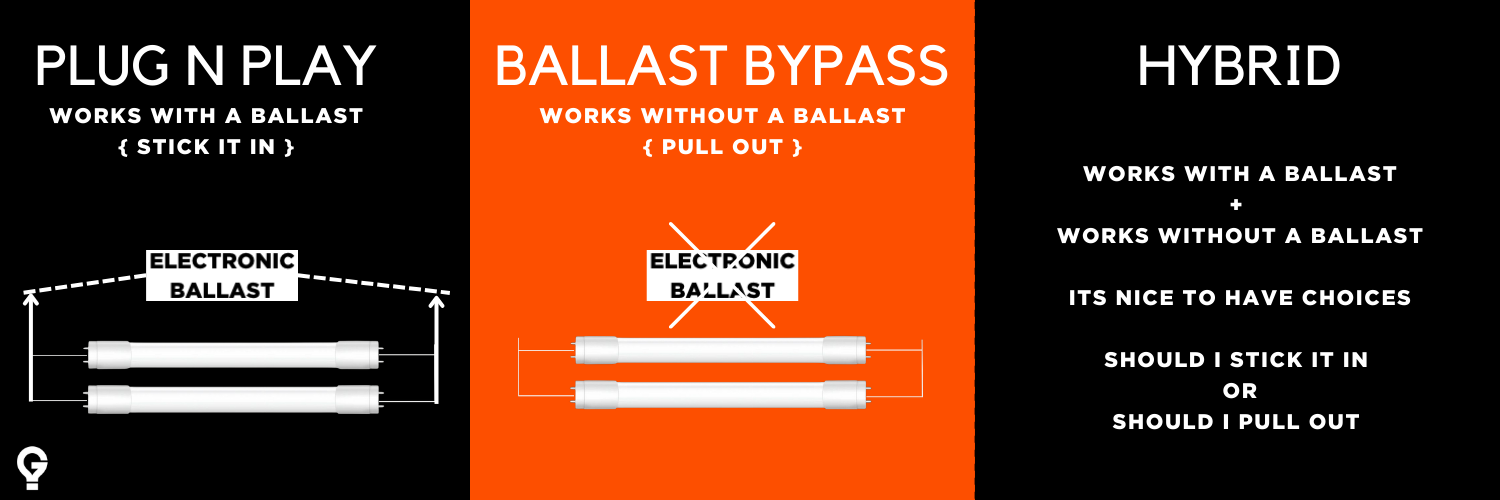
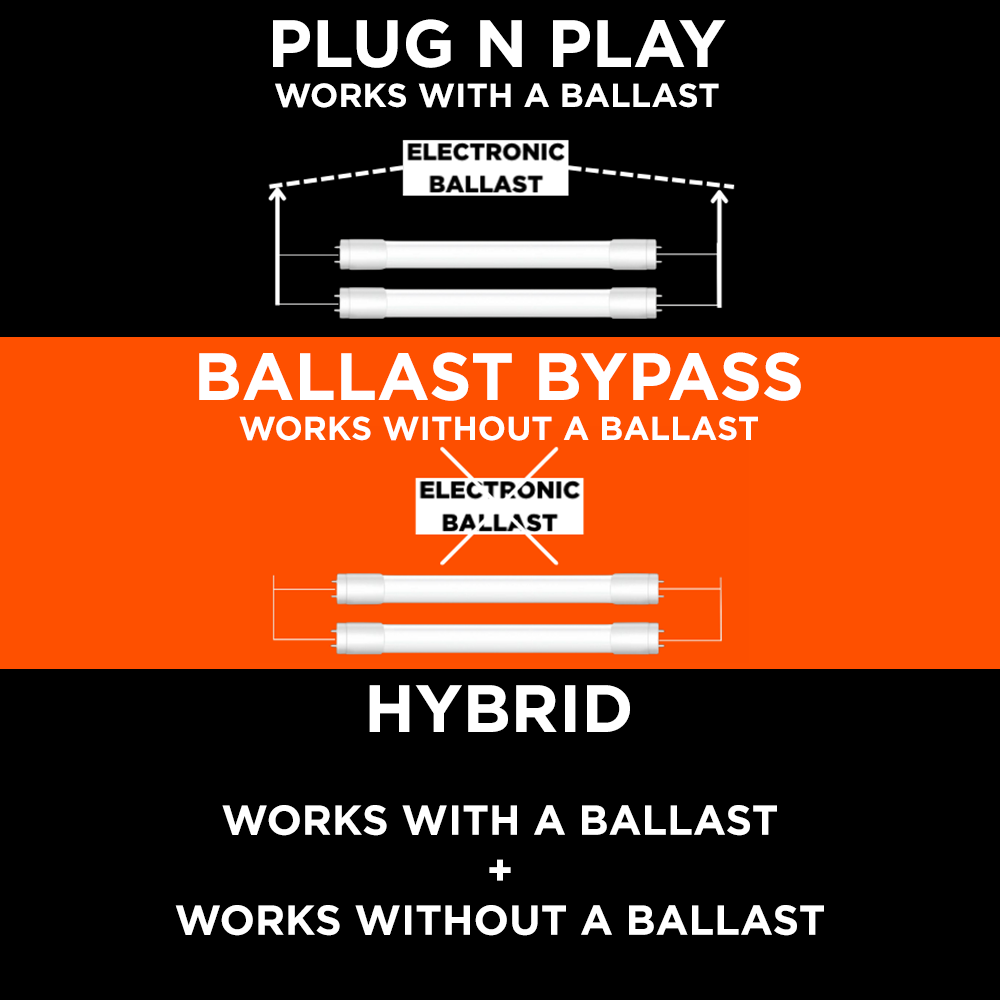
Depending on the LED tube, the installation may use the existing ballast, bypass it, or require a different installation method.
That's why you need to know exactly what product you're installing before work begins.
Never assume two LED tubes that look identical are installed the same way.
Follow the manufacturer's installation instructions and product markings.
If the retrofit requires rewiring, ballast bypass, socket changes, or other electrical modifications, use a qualified electrician.
If you're working through a large fluorescent replacement project, you can also browse GoodBulb's commercial lighting solutions to compare options for different applications.
Step 5: Compare Lumens AND Watts
Here's where LED shopping sometimes gets confusing.
Watts tell you how much power a lamp uses.
Lumens tell you how much light it produces.
Both matter.
If you're replacing a 32-watt fluorescent lamp with an LED, don't choose the replacement based only on finding another "32-watt equivalent."
Look at the actual light output.
You want to determine how many lumens the existing system produces and how much light the space actually needs.
A lower-wattage LED may produce the light you need while using substantially less electricity.
That's the point of the retrofit.
If lumens, watts, Kelvin, CRI, or dimming specifications are starting to blur together, GoodBulb's LED light bulb FAQ breaks down the basics in plain language.
Step 6: Choose the Right Color Temperature
Energy efficiency won't matter much if everyone hates the new lighting.
Color temperature is measured in Kelvin (K) and changes how warm or cool the light appears.
Common commercial choices include:
- 3000K: Warm, comfortable light
- 3500K: Slightly warmer neutral light
- 4000K: Clean, neutral light frequently used in commercial spaces
- 5000K: Cooler, daylight-like appearance
The "best" Kelvin depends on the application.
An office, warehouse, restaurant, showroom, parking garage, and hotel lobby shouldn't automatically use the same light.
Look at the space first.
Then choose the light.
Step 7: Calculate the Potential Energy Savings
Now we get to the numbers.
Start with:
Existing wattage – New LED wattage = Wattage reduction
Then consider:
- Number of lamps
- Daily operating hours
- Days used per year
- Electricity rate
For example, replacing a high-wattage lamp in one fixture may not look impressive.
Multiply the savings across 200 fixtures running ten or twelve hours a day, and the picture changes quickly.
Don't forget maintenance costs either.
If you're replacing lamps less often, you're also reducing the labor, lifts, ladders, replacement inventory, and disruption associated with failed lighting.
Want to see what those numbers could look like for your building?
Use GoodBulb's LED Energy Savings Calculator to compare your existing bulb wattage with an LED replacement and estimate potential annual savings.
Step 8: Test Before You Retrofit the Entire Building
This step can save a lot of headaches.
Pick a representative area and install a small number of the proposed LEDs first.
Then look at them.
Actually look at them.
Ask:
- Is the space bright enough?
- Is it too bright?
- Does the color look right?
- Is there glare?
- Are there dark spots?
- Do the LEDs work correctly with existing controls?
- Is there flickering?
- Is the light distribution what you expected?
If the test looks wrong, it's much easier to change ten bulbs than 1,000.
Step 9: Create a Retrofit Plan
Once you've tested the solution, document what goes where.
Your plan should include:
- Fixture location
- Existing lamp
- Replacement LED
- Quantity
- Installation method
- Controls
- Installation priority
- Any electrical work required
For larger facilities, breaking the retrofit into phases may make sense.
Start with the fixtures that:
- Operate the longest
- Consume the most energy
- Fail most frequently
- Are hardest to maintain
- Have the poorest existing light
This lets you tackle the biggest opportunities first.
Step 10: Install Safely
Simple compatible lamp replacements may be straightforward.
Electrical modifications are different.
If a retrofit involves wiring changes, ballast removal or bypass, socket modifications, drivers, voltage changes, or alterations to the fixture, have the work performed by someone qualified to do it.
Always follow:
- Manufacturer instructions
- Product labels
- Applicable electrical codes
- Fixture requirements
- Workplace safety procedures
A lighting retrofit should solve problems.
Not create new ones.
Step 11: Measure the Results
Once the retrofit is complete, don't just assume it worked.
Compare the new system with the old one.
Review:
- Lighting energy consumption
- Utility costs
- Maintenance calls
- Failed lamps
- Lighting quality
- Employee or occupant feedback
Take before-and-after photos too.
They're useful for documenting the improvement—and they're much more convincing than telling someone, "Trust us, it looks better."
Step 12: Maintain Your New LED Lighting
LED doesn't mean maintenance-free.
Fixtures still collect dust and dirt.
Controls need to work properly.
Drivers and other electrical components can eventually fail.
Periodically:
- Clean fixtures and lenses
- Inspect lamps and sockets
- Check sensors and controls
- Look for flickering or color changes
- Replace failed components
- Update your lighting inventory
A little maintenance helps protect the investment you just made.
Should You Retrofit or Replace the Fixture?
There's no universal answer.
Retrofit When:
- The existing fixture is in good condition
- A compatible LED solution is available
- Installation is straightforward
- Keeping the fixture reduces project cost
- The fixture still distributes light effectively
Consider Replacing the Fixture When:
- The housing is damaged or deteriorating
- Existing components are unreliable
- You want integrated controls
- The fixture produces poor light distribution
- Retrofit costs are approaching the cost of replacement
- A new LED fixture provides a better long-term solution
Sometimes the smartest retrofit is knowing when not to retrofit.
If you're replacing traditional incandescent lighting rather than fluorescent fixtures, read our guide to replacing incandescent bulbs with LEDs for more help comparing wattage, brightness, and replacement options.
LED Lighting Retrofit FAQs
What Does Retrofitting Lights to LED Mean?
An LED retrofit upgrades an existing lighting system to LED technology.
Depending on the fixture, that can mean replacing only the lamp, installing a retrofit kit, modifying existing components, or replacing the entire fixture.
Can You Replace Fluorescent Tubes With LED Tubes?
Yes, but you need an LED tube designed for your fixture and installation method.
Some LED tubes are designed to operate with compatible fluorescent ballasts, while others require the ballast to be removed or bypassed.
Always check the specific product requirements before installation.
Do LED Retrofits Require an Electrician?
Simple compatible lamp replacements may not.
Any project involving rewiring, ballast bypass, socket modification, drivers, voltage changes, or other electrical work should be handled by a qualified professional.
How Do I Choose the Right LED Replacement?
Start with the existing lamp and fixture.
Check:
- Base
- Bulb shape
- Voltage
- Lumens
- Wattage
- Color temperature
- CRI
- Dimming requirements
- Fixture rating
- Installation method
If you're unsure what any of those specifications mean, our lighting FAQ can help you make sense of them.
How Much Energy Can an LED Lighting Retrofit Save?
It depends on the existing lighting, LED replacement, hours of operation, controls, electricity costs, and application.
The best way to estimate savings is to compare the wattage and operating hours of your current system with the proposed LED system.
You can get a quick estimate using the GoodBulb LED Energy Savings Calculator.
Should I Replace Every Light at Once?
Not necessarily.
For larger properties, a phased retrofit may make more sense.
Start with high-use or high-maintenance areas and work through the rest of the building based on your priorities and budget.
Not Sure What You're Looking At?
That's normal.
Commercial buildings can accumulate years of different fixtures, bulbs, ballasts, and lighting technologies.
You don't have to identify all of it yourself.
Take pictures of:
- The bulb you're replacing
- The writing printed on the bulb
- The fixture
- The area you're trying to light
Then ask a GoodBulb lighting expert.
Tell us what you have, what isn't working, and what you want the space to do.
Our lighting team can help you identify what you're working with, compare LED retrofit options, and narrow down the right replacement for your application.
Because a successful LED retrofit isn't about putting LEDs everywhere.
It's about putting the right light in the right place.