
People may come to your hotel restaurant for dinner.
But they're experiencing a lot more than the food.
The table.
The music.
The people around them.
The view from the window.
The bar across the room.
The pool glowing outside.
And, whether they realize it or not, the lighting.
Lighting can make a dining room feel warm and intimate or bright and energetic. It can help food look better, make menus easier to read, draw attention to the bar, improve visibility around a pool deck, and change the mood of a space from breakfast to cocktails without moving a single piece of furniture.
For hotels, that flexibility matters.
A restaurant at 7 a.m. has a very different job from that same restaurant at 9 p.m.
Here's how to create hotel restaurant, lounge, bar, rooftop, and poolside lighting that works throughout the guest experience.
Why Hotel Restaurant Lighting Matters
Hotel dining spaces have to do something most standalone restaurants don't:
Fit into the larger guest experience of the property.
A luxury resort restaurant shouldn't suddenly feel disconnected from the lobby guests just walked through.
A boutique hotel's cocktail bar should feel like part of the same story as its guestrooms.
A poolside restaurant should feel connected to the water, landscaping, and outdoor environment.
And a breakfast area in a limited-service hotel still needs to feel comfortable, clean, and inviting.
Your lighting should support:
- The hotel's brand and atmosphere
- The type of food or drinks being served
- Guest comfort
- Menu readability
- Food presentation
- Staff visibility
- Day-to-night transitions
- Outdoor and poolside spaces
- Safety
- Energy and maintenance goals
Good hotel lighting isn't about making every space brighter.
It's about putting the right amount and quality of light in the right place.
1. Design the Lighting Around the Experience
Start with a simple question:
How should guests feel here?
A breakfast café may need to feel open, fresh, and energetic.
A fine-dining restaurant may call for something warmer and quieter.
A hotel lounge might need to transition from casual meetings in the afternoon to cocktails at night.
A rooftop bar may rely heavily on the skyline itself.
A poolside restaurant may need enough light for comfortable dining without overpowering the water and night sky.
Before choosing bulbs or fixtures, think about:
- Who uses the space
- What time of day it's busiest
- How long guests typically stay
- Whether the space changes function throughout the day
- How much natural daylight enters the room
- The colors and finishes used in the interior
- Outdoor views
- The hotel's existing brand standards
Lighting design starts with the space.
Not the bulb.
2. Layer Your Restaurant Lighting
One fixture trying to light an entire restaurant rarely creates a great environment.
Most hospitality spaces benefit from several layers of light working together.
Ambient Lighting
This is the general light throughout the room.
It should provide enough visibility to move around comfortably without overpowering the space.
Recessed lights, ceiling fixtures, indirect lighting, and architectural lighting often contribute to the ambient layer.
Task Lighting
Task lighting helps guests and employees perform specific activities.
In a restaurant, that may include:
- Reading menus
- Seeing food
- Working at the host stand
- Preparing drinks
- Processing payments
- Working in service stations
Pendant lights over tables and focused lighting at bars are common examples.
Accent Lighting
Accent lighting draws attention somewhere.
Use it to highlight:
- Artwork
- Architectural details
- Shelving
- Bottle displays
- Signage
- Textured walls
- Plants
- Decorative features
Accent lighting helps create visual hierarchy instead of making every surface equally bright.
Decorative Lighting
Sometimes the fixture itself is part of the experience.
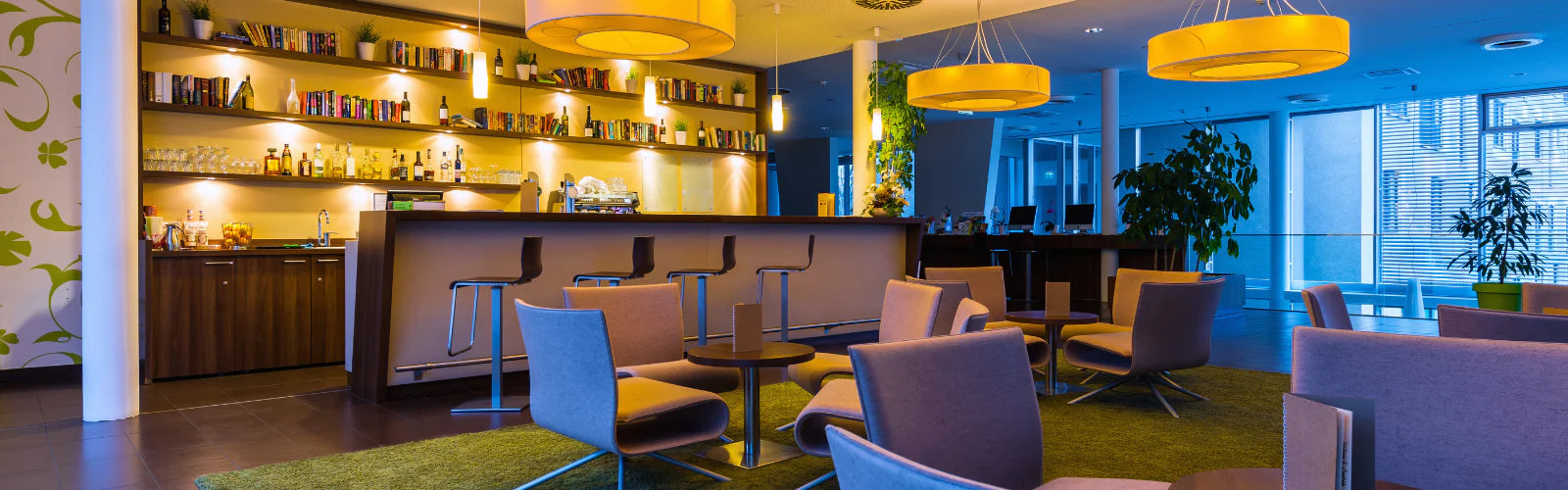
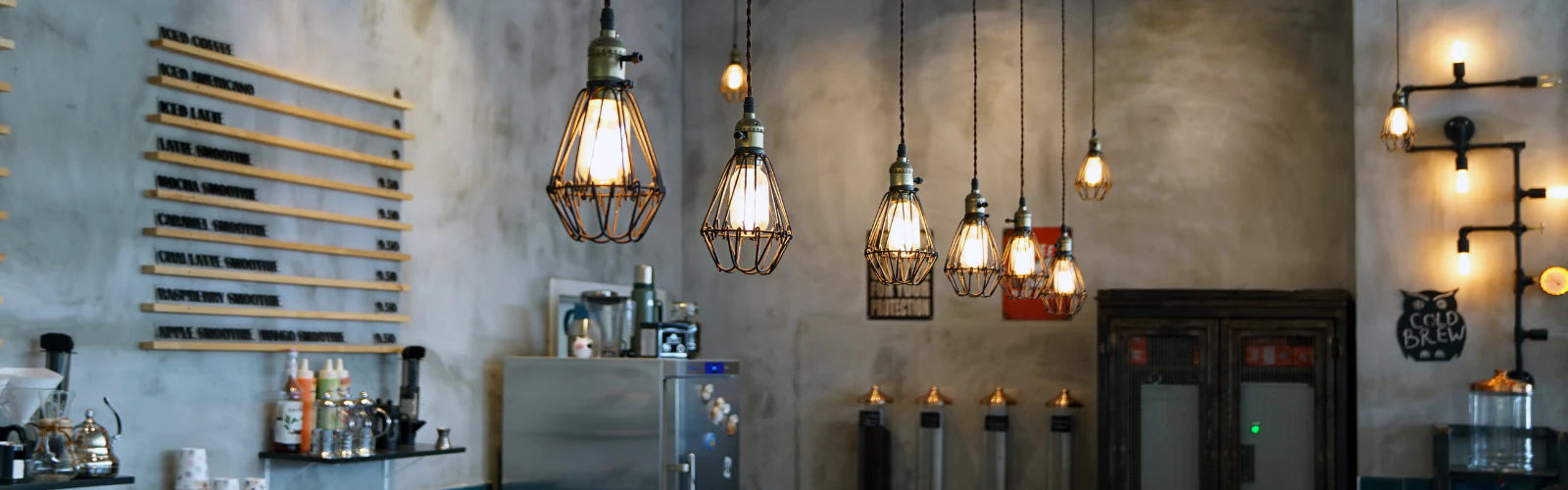
Chandeliers, pendants, sconces, filament-style bulbs, and other decorative fixtures can reinforce the property's personality.
These same principles also apply beyond dining spaces. See our guide to hotel lobby lighting for more ideas on layered hospitality lighting.
3. Use Lighting to Create Zones
A hotel restaurant isn't necessarily one space just because there aren't walls between every section.
Lighting can create smaller environments within a larger room.
Think about:
- Booths
- Standard tables
- High-top seating
- Bar seating
- Lounge seating
- Host station
- Buffet or breakfast service
- Walkways
- Private dining areas
- Outdoor patios
Each zone can have slightly different lighting while still belonging to the same overall design.
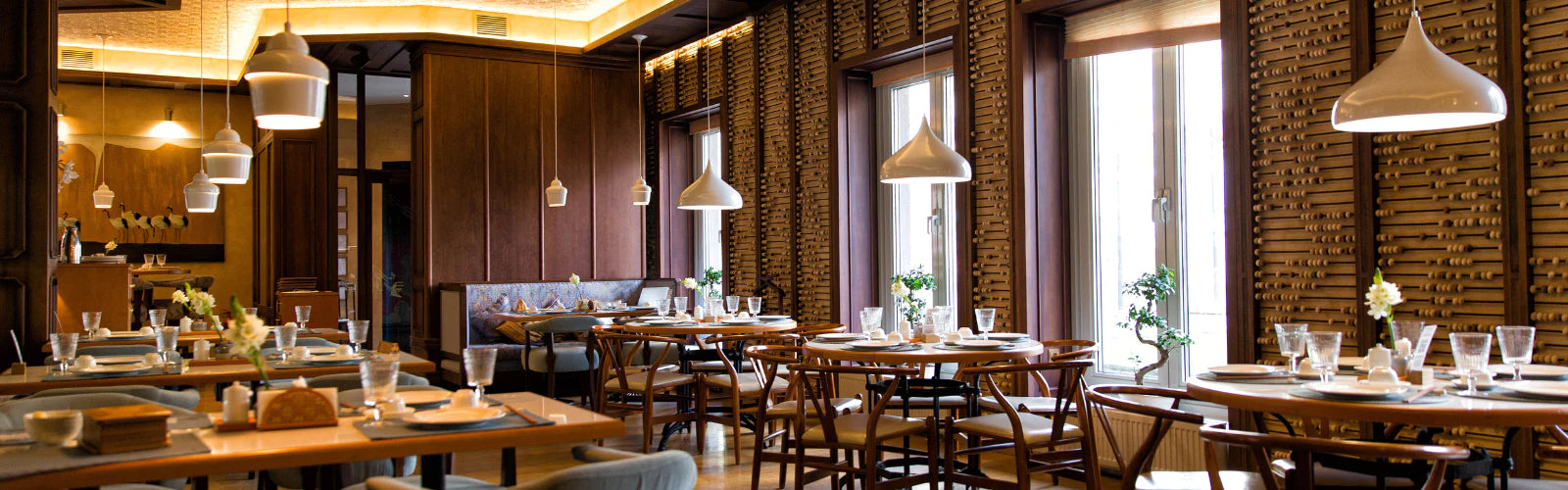
A pendant over a booth, for example, visually creates a more intimate space around that table.
Accent lighting behind the bar tells the eye where the energy of the room is.
Softer perimeter light can make lounge seating feel separate from a brighter circulation path.
This is one of the simplest ways to make a large hotel dining room feel more intentional.
4. Choose the Right Color Temperature
Color temperature is measured in Kelvin (K).
Lower Kelvin values appear warmer and more golden.
Higher Kelvin values appear cooler and whiter.
For many restaurant, lounge, and bar environments, warmer light is a useful starting point.
2700K
Warm and familiar.
Often works well in:
- Fine dining
- Lounges
- Bars
- Intimate restaurants
- Decorative lighting
3000K
Still warm, but a little cleaner.
It's a versatile option for many hospitality environments.
3500K
More neutral.
It may work well in brighter cafés, breakfast spaces, service areas, and applications where you want less warmth.
4000K–5000K
Cooler and more neutral-to-daylight in appearance.
These temperatures may be useful in certain back-of-house, maintenance, kitchen, or task-oriented environments, but they're usually not the first choice for creating an intimate restaurant or lounge atmosphere.
That doesn't mean every bulb in a restaurant has to use exactly the same Kelvin.
But large, unexplained differences can look accidental.
If you need help interpreting Kelvin, lumens, wattage, CRI, or other specifications, GoodBulb's lighting FAQ breaks down the basics.
5. Pay Attention to CRI Around Food
Brightness isn't the only thing affecting what guests see.
CRI, or Color Rendering Index, describes how naturally and accurately colors appear under a light source compared with a reference source.
In restaurants, that matters.
The greens in a salad.
The red in a steak.
The color of a cocktail.
The wood of a table.
The fabric on a chair.
Poor color rendering can make beautifully prepared food and carefully chosen finishes look flat or strange.
For areas where food presentation and interior finishes matter, higher-CRI lighting is worth considering.
But CRI shouldn't be evaluated alone.
Color temperature, brightness, beam distribution, fixture placement, and the surfaces being illuminated all contribute to the final result.
6. Make Dimming Part of the Design
A hotel restaurant doesn't operate in one lighting condition all day.
Breakfast at 7 a.m.
Lunch at noon.
Happy hour at 5.
Dinner at 8.
Late-night drinks at 11.
That's why dimmable lighting can be so useful in hospitality.
It gives the team control over the atmosphere without replacing bulbs or moving fixtures.
During brighter daylight hours, you may use higher light levels.
As natural light fades, interior lighting can gradually transition with it.
Just make sure the system is designed correctly.
A dimmable LED still needs a compatible dimmer.
An incompatible bulb-and-dimmer combination may cause:
- Flickering
- Buzzing
- Poor low-end dimming
- Lights that shut off unexpectedly
- Inconsistent performance
If you're upgrading older hotel lighting, test the bulb and control combination before rolling it out across the property.
7. Don't Forget the Tables
The guest sitting at the table needs enough light to:
- Read the menu
- See the food
- Recognize the person across from them
- Find the credit-card receipt
- Take the inevitable photo of dinner
But that doesn't mean blasting the table with light.
Pendant fixtures can work beautifully over booths, tables, and high tops because they create a defined pool of light.
The mounting height matters.
So does the beam angle.
Too high and the light may spread everywhere.
Too low and it can block sightlines or create uncomfortable glare.
The goal is to illuminate the table while preserving the atmosphere around it.
8. Design Bar Lighting Differently
The restaurant and bar may share a room.
They don't necessarily need identical lighting.
A bar usually benefits from more contrast and visual emphasis.
Guests should immediately understand:
That's the bar.
Accent lighting can help highlight:
- Back-bar shelving
- Bottles
- Architectural details
- Countertops
- Decorative displays
Task lighting also matters.
Bartenders need enough functional light to work safely and efficiently, even when the guest-facing environment is intentionally dim.
That's where layered lighting becomes especially useful.
The guest sees atmosphere.
The employee can still see what they're doing.
9. Let the Lighting Change With the Time of Day
One of the biggest opportunities in hotel dining lighting is flexibility.
The same space may serve:
Breakfast → Meetings → Lunch → Happy Hour → Dinner → Late-night drinks
The lighting shouldn't stay frozen throughout all six.
Create lighting scenes or operating guidelines for different periods.
Morning
Use natural daylight when available and support it with comfortable general illumination.
Afternoon
Adjust artificial lighting as daylight conditions change.
Evening
Reduce overall ambient levels and let table, accent, and decorative lighting become more prominent.
Late Night
A lounge or bar may become more intimate, while paths, stairs, exits, and working areas still need appropriate visibility.
You don't need to redesign the room every four hours.
You need a system that can adapt.

10. Watch Reflections in Rooftop and Sky-View Restaurants
A great rooftop restaurant has one lighting feature you didn't install:
The view.
City lights.
Sunsets.
Skylines.
Water.
Mountains.
Whatever guests came upstairs to see.
Interior lighting shouldn't compete with it.
Large windows can reflect bright interior fixtures back toward guests, especially after dark.
That can turn a beautiful skyline into a reflection of the ceiling lights.
When designing lighting around glass:
- Check fixture angles
- Reduce unnecessarily bright sources near windows
- Consider reflected glare
- Test the room after dark
- Sit where an actual guest would sit
Don't evaluate rooftop lighting only in daylight.
The conditions at 9 p.m. may reveal problems you couldn't see at 2 p.m.
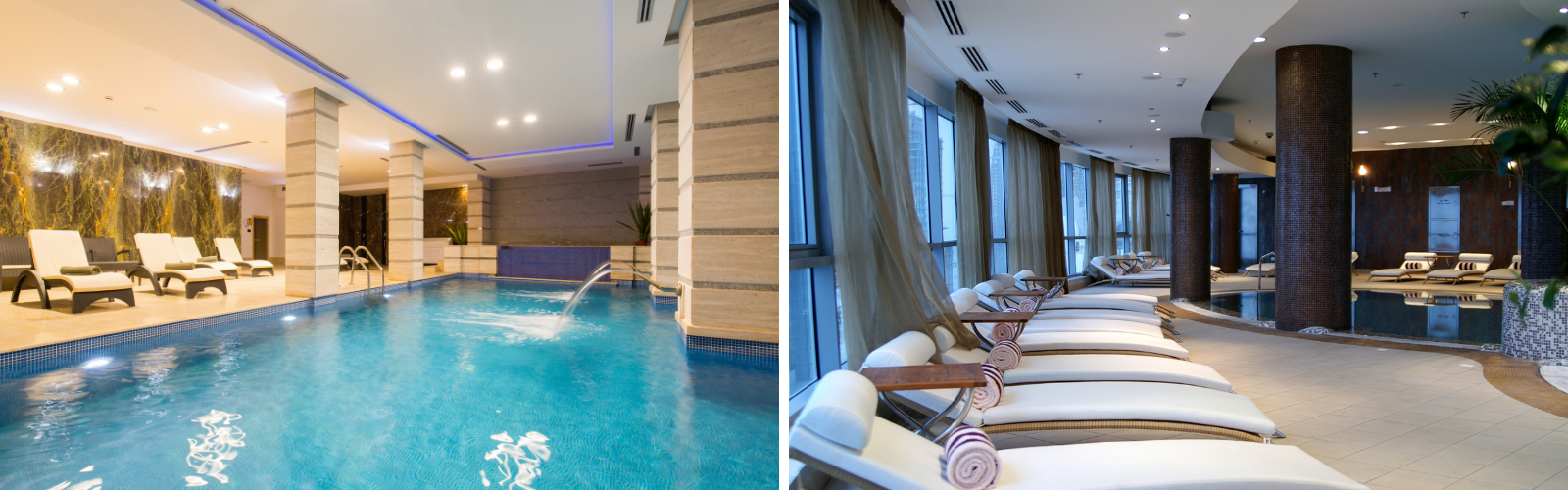
11. Include Pool and Spa Lighting in the Guest Experience
For many hotels and resorts, dining doesn't stop at the restaurant door.
Guests may move between:
Restaurant → Bar → Patio → Pool → Spa → Lounge
Those spaces should feel connected.
Pool and spa lighting has to balance atmosphere with practical visibility.
A pool deck shouldn't feel like a parking lot.
But guests still need to see:
- Steps
- Pathways
- Deck edges
- Seating areas
- Bars
- Dining tables
- Entrances and exits
- Cabanas
- Landscaping
- Changes in elevation
Pool Lighting
Pool areas often benefit from a combination of water lighting, deck lighting, architectural lighting, landscaping, and carefully placed task lighting.
Avoid relying on one extremely bright source to do everything.
Instead, layer light around the space.
Use enough illumination for comfortable navigation while allowing the water itself to remain part of the visual experience.
Poolside Restaurant and Bar Lighting
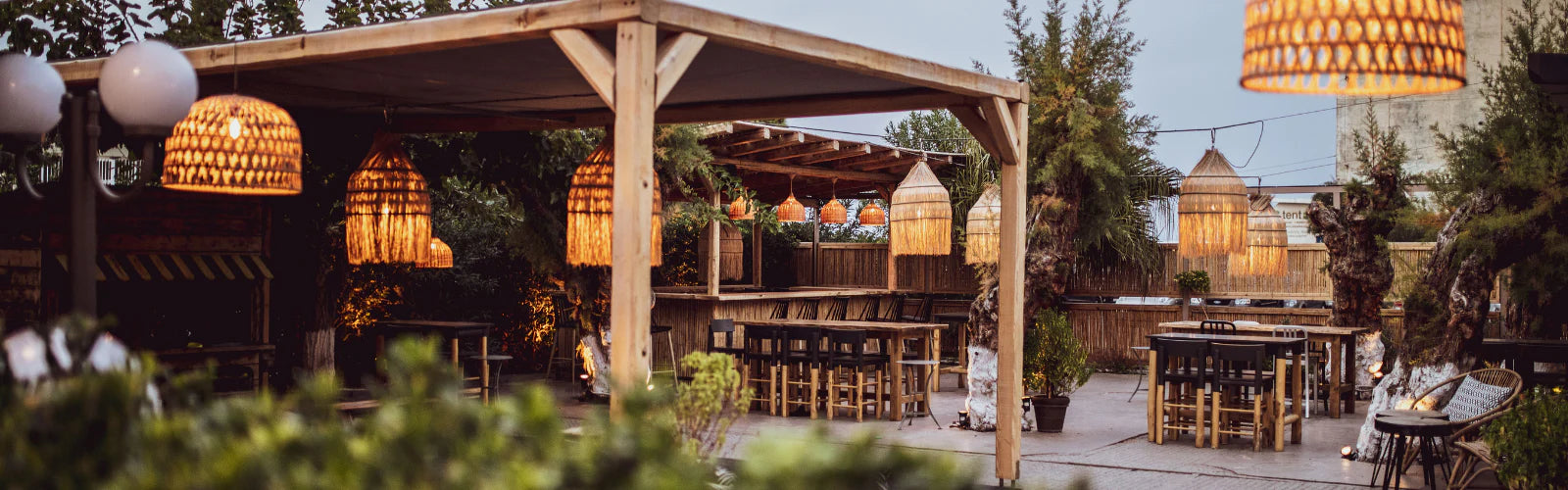
If your hotel has dining or drinks next to the pool, treat those seating areas much like an outdoor restaurant.
Guests still need enough light to:
- Read menus
- See food and drinks
- Move around tables
- Find steps
- Recognize uneven surfaces
Warmer lighting around dining and lounge areas can help preserve a relaxed hospitality atmosphere after sunset.
Control Glare Around Water
Water reflects light.
So do glass walls, polished surfaces, and wet pool decks.
Fixtures that seem fine during the day can become uncomfortable at night once reflections appear.
Check:
- Fixture angles
- Shielding
- Reflections on the water
- Direct glare
- Light spilling into guestrooms
- Reflections in nearby windows
The best way to evaluate this?
Visit the space after dark.
Choose Lighting for the Environment
Poolside fixtures may be exposed to:
- Moisture
- Rain
- Splashing water
- Humidity
- Heat
- Temperature changes
- Corrosive conditions
Lighting products should be appropriately rated for the exact environment where they're installed.
Areas around pools also have specific electrical requirements, so electrical work and fixture selection should follow applicable codes and qualified installation practices.
Spa Lighting
Spa lighting has a different job from pool-deck lighting.
A spa should usually feel calmer and more controlled.
Consider:
- Warm color temperatures
- Dimming
- Indirect lighting
- Soft accent lighting
- Comfortable illumination around treatment and relaxation areas
Be thoughtful about fixture placement around massage tables and treatment areas.
Guests shouldn't be lying down staring directly into a harsh overhead light.
For a deeper look at this subject, read our full guide to hotel pool and spa lighting.
12. Give Back-of-House Lighting Its Own Strategy
Front-of-house lighting creates atmosphere.
Back-of-house lighting has a different job.
It needs to help people work.
Kitchen, prep, dishwashing, storage, service, office, and employee areas should prioritize:
- Visibility
- Safety
- Appropriate light levels
- Color recognition where relevant
- Easy maintenance
- Durability
- Energy efficiency
A dim dining room may feel intimate.
A dim prep area is just difficult to work in.
Don't carry the same lighting strategy into both spaces.
Back-of-house areas also tend to operate for long periods, making them good candidates for energy-efficient LED lighting and controls.
13. Pay Attention to Maintenance
Hospitality lighting has another requirement:
It has to keep working.
A beautiful pendant with one dead bulb doesn't look intentionally moody.
It looks neglected.
In a hotel restaurant, bar, pool deck, or lounge, maintenance teams should monitor:
- Burned-out lamps
- Inconsistent color temperatures
- Flickering
- Dimming problems
- Dirty fixtures and lenses
- Lamps that have shifted color
- Failed accent lighting
- Exterior fixtures exposed to weather
- Poolside fixtures showing wear or corrosion
Consistency matters.
If six identical pendants hang over six tables, they should look like they belong together.
A replacement bulb with the wrong Kelvin or brightness can stand out immediately.
14. Consider Energy and Maintenance Together
A hotel restaurant's lighting cost isn't just electricity.
It's also maintenance.
Every failed lamp involves:
- A replacement product
- Staff time
- Inventory
- Installation
- Potential ladders or lifts
- Disposal
- Disruption to the space
Longer-life LED lighting can help reduce replacement frequency while also lowering energy use compared with older technologies.
If you're considering a larger conversion, use GoodBulb's LED Energy Savings Calculator to start comparing your existing wattage with potential LED replacements.
Then evaluate the maintenance side too.
A bulb that's difficult to reach has a very different replacement cost from one sitting in a table lamp.
Common Hotel Restaurant, Bar & Pool Lighting Mistakes
Making Everything the Same Brightness
Without contrast, a restaurant can feel flat.
Use layers and zones instead.
Choosing Bulbs Only by Wattage
Watts measure energy use, not brightness.
Compare lumens.
Ignoring Color Temperature
Mixing different Kelvin temperatures unintentionally can make a carefully designed room look inconsistent.
Using Very Low Light Everywhere
Atmosphere matters.
So does seeing the menu.
Find the balance.
Forgetting CRI
Food, fabrics, artwork, and finishes need to look the way they're supposed to look.
Ignoring Dimmer Compatibility
A dimmable LED isn't useful if the LED and dimmer don't work properly together.
Forgetting Reflections
This matters in rooftop restaurants, poolside areas, glass-heavy spaces, and anywhere water is part of the view.
Overlighting the Pool Deck
More light isn't automatically better.
Too much can create glare, flatten the atmosphere, and compete with the pool or view.
Treating Back of House Like Front of House
These spaces do different jobs and need different lighting.
Waiting Until Bulbs Fail Everywhere
Preventive maintenance keeps the property looking intentional rather than partially burned out.

Hotel Restaurant, Bar & Pool Lighting FAQs
What color temperature is best for a hotel restaurant?
There isn't one universal answer, but warmer color temperatures such as 2700K–3000K are common starting points for restaurants, lounges, and bars where comfort and intimacy are priorities.
Brighter or more neutral environments may use different temperatures.
Always consider the hotel's brand and the purpose of the space.
What is the best lighting for a hotel bar?
A hotel bar usually benefits from layered lighting: comfortable ambient light, task lighting for staff, and accent lighting for the back bar, bottles, surfaces, or architectural details.
Dimming gives the space more flexibility throughout the day.

Should restaurant lights be dimmable?
Dimming can be very useful because restaurants often operate across different times of day and lighting conditions.
Make sure the LED bulbs and dimming controls are compatible.
What CRI is good for restaurant lighting?
Higher color rendering can be valuable in restaurants because food, beverages, furniture, and finishes rely heavily on accurate color.
But CRI should be considered alongside Kelvin, brightness, beam distribution, and fixture placement.
What lighting is best for a hotel poolside restaurant or bar?
Poolside hospitality spaces usually benefit from layered outdoor lighting.
Use comfortable ambient and decorative lighting around dining and lounge areas while maintaining clear visibility around:
- Steps
- Walkways
- Bars
- Deck edges
- Entrances
- Other circulation areas
Fixture ratings and electrical requirements should also match the exact poolside environment.
For more detail, read our hotel pool and spa lighting guide.

Is LED lighting good for hotel restaurants?
LEDs can be a strong option for hospitality because they are available in many color temperatures, brightness levels, shapes, beam patterns, and dimming configurations while generally using less energy and offering longer rated life than traditional incandescent lighting.
How should a hotel restaurant reduce lighting costs?
Start with operating hours and the fixtures used the most.
Look for opportunities to:
- Reduce unnecessary wattage
- Replace inefficient lighting
- Use appropriate controls
- Schedule lighting by zone
- Use occupancy controls in suitable back-of-house areas
- Reduce replacement frequency with reliable products
Use the GoodBulb LED Energy Savings Calculator to start comparing your current lighting with potential LED replacements.
What lighting should be used in a hotel kitchen?
Kitchen and back-of-house lighting should prioritize visibility, safety, durability, and ease of maintenance rather than the intimate atmosphere used in the dining area.
Fixture requirements will vary depending on the environment and applicable codes.
Think About the Whole Hotel
The restaurant doesn't exist in isolation.
Guests may move from:
Lobby → Restaurant → Bar → Pool → Hallway → Guestroom
The experience should feel connected.
If you're working through the rest of the property, continue with:
- Hotel Lobby Lighting
- Hotel Hallway & Staircase Lighting
- Hotel Guestroom & Bathroom Lighting
- Hotel Pool & Spa Lighting
- Choosing LED Lighting for Hotels
That's how you turn separate fixtures into a lighting system.
Need Help With Your Hotel Lighting?
Hotel properties contain a lot of different bulbs.
Restaurant pendants.
Bar accent lights.
Poolside fixtures.
Lobby recessed lights.
Guestroom lamps.
Hallway fixtures.
Kitchen lighting.
Exterior fixtures.
And somewhere in the building, inevitably, there's a bulb nobody can identify.
Take a picture.
Show us:
- The bulb
- The markings printed on it
- The fixture
- The area you're lighting
Then ask a GoodBulb lighting expert.
Tell us what you want to improve—atmosphere, color, brightness, maintenance, energy use, or all of the above.
We'll help you narrow down the right lighting for the application.
Because guests may never mention that the lighting was perfect.
They'll just remember that the place felt right.